Most Corporate Training Gets This Wrong — Start With the Learner, Not the Content
Most corporate training starts in the same place:
With the content.
What needs to be covered.
What needs to be included.
What needs to be checked off.
And that’s usually where things begin to break down.
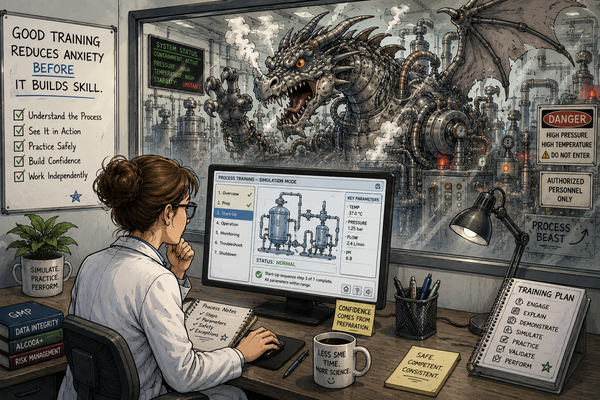
In a recent pharmaceutical training project supporting a Flex Mill system, the challenge wasn’t a lack of information. The content already existed, and it was technically accurate.
The real challenge was usability.
The people going through the training weren’t sitting in a classroom with time to absorb and reflect. They were working in active lab environments, interacting with equipment, making decisions, and navigating systems in real time.
Training that looks complete on paper doesn’t always translate into performance on the floor.
So instead of asking:
“What do we need to teach?”
The more useful question became:
“What does the learner need to do?”
That shift changes the entire design process.
Instead of organizing content by topic, training is structured around tasks.
Instead of presenting information linearly, it’s delivered in context.
Instead of focusing on coverage, the focus becomes clarity and application.
In practice, that meant:
- Building training around real workflows rather than abstract steps
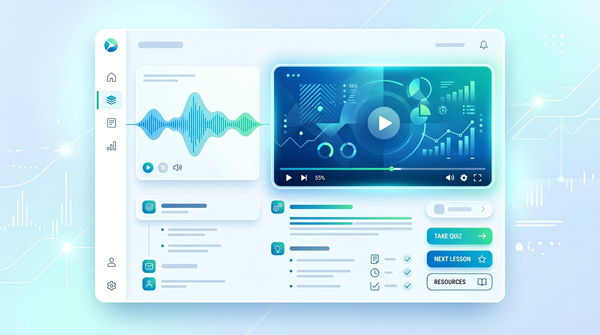
- Using visual and video-based elements to reflect the actual environment
- Reducing unnecessary cognitive load so critical actions stand out
- Designing with the assumption that learners will need to recall and apply information quickly
These are not new ideas.
They are foundational to adult learning.
But in many corporate environments, they’re often overshadowed by the pressure to include everything rather than emphasize what matters.
Adults learn differently.
They need to understand relevance.
They connect new information to existing experience.
And most importantly, they need to apply what they’ve learned in a meaningful way.
When training is designed with that in mind, something shifts.
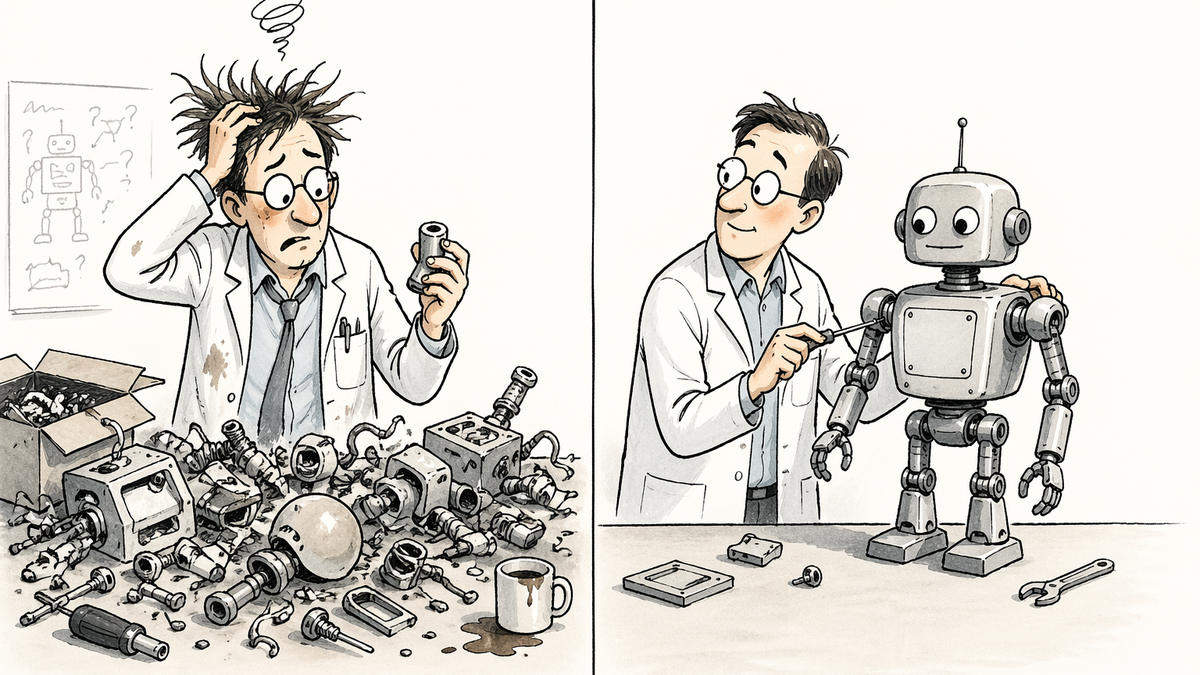
It stops being something people complete,
and starts becoming something they actually use.
In the next post, I’ll break down how designing for real-world performance—rather than completion—changed engagement and usability across teams.
Interested in building training that actually works in real-world environments?
Contact Q Optix qoptix.com